 English
 简体中文
简体中文
 Chinese
 English
What Is a 3D Shoe Upper Knitting Machine?
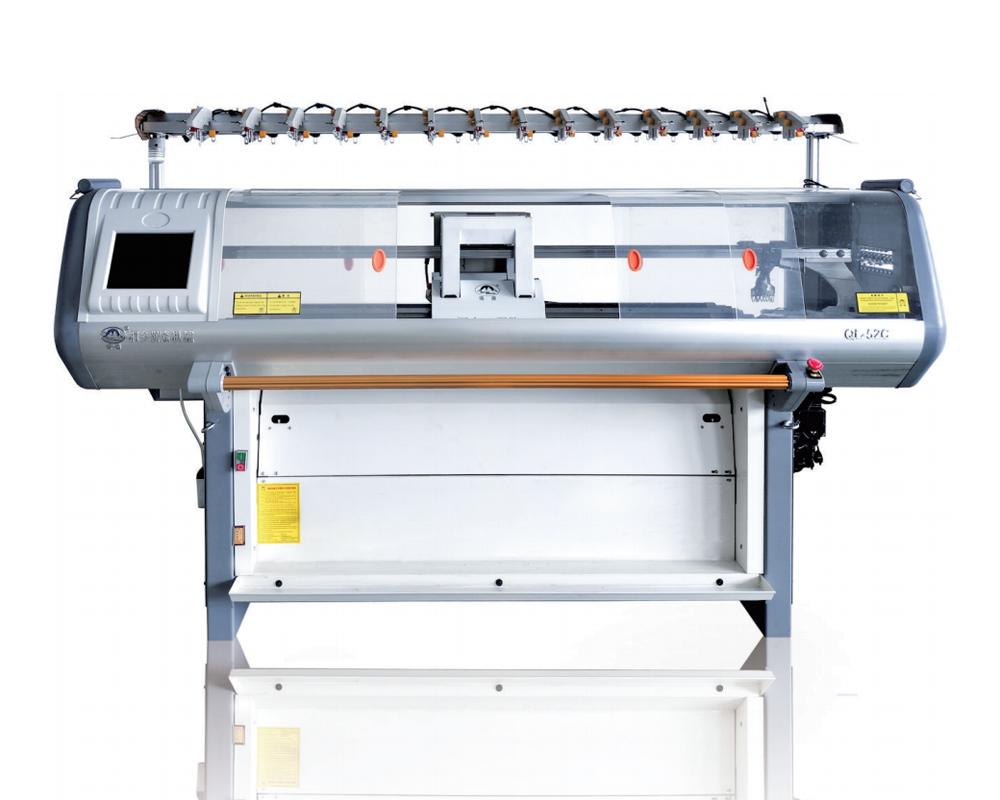
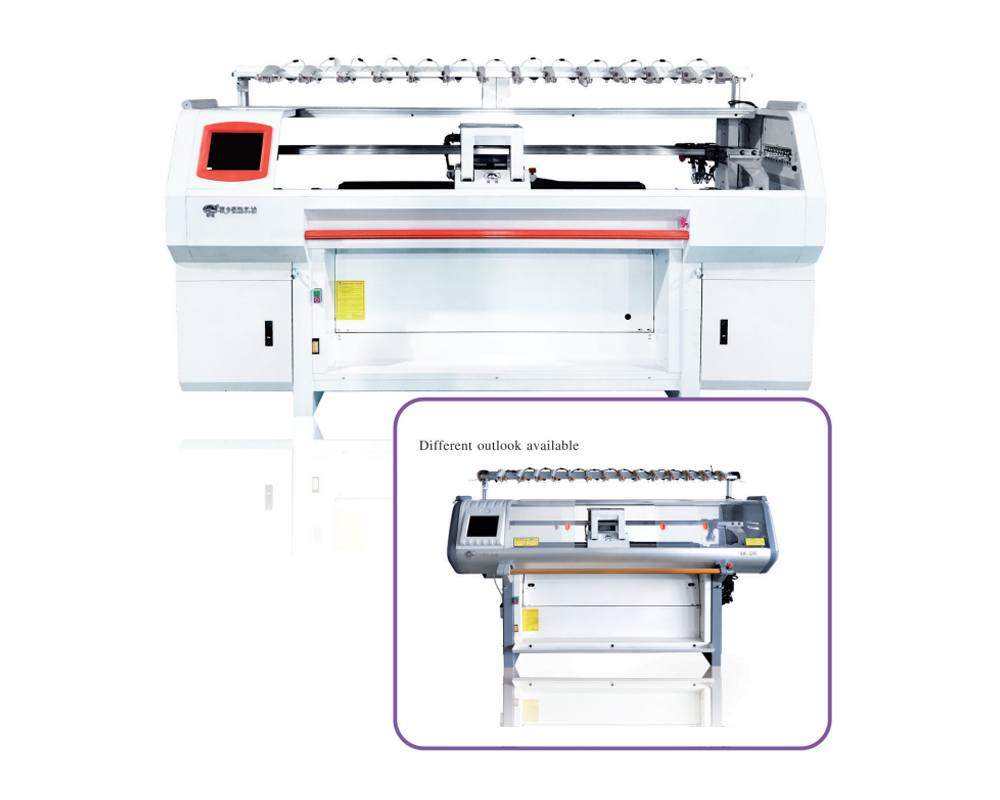
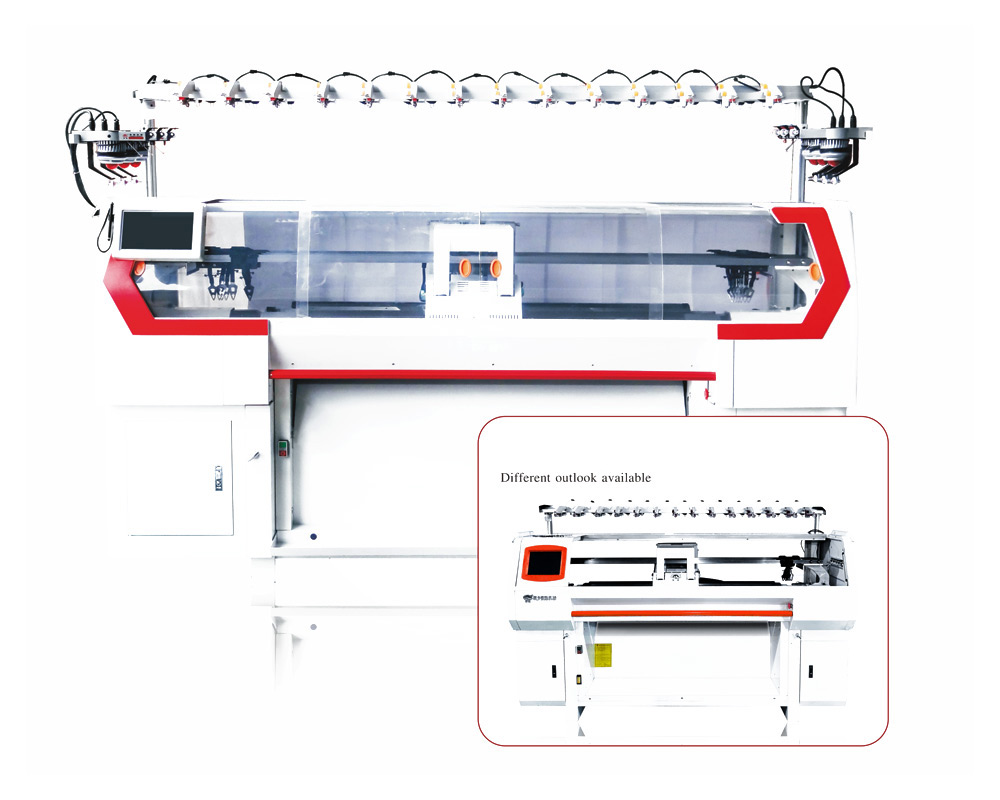
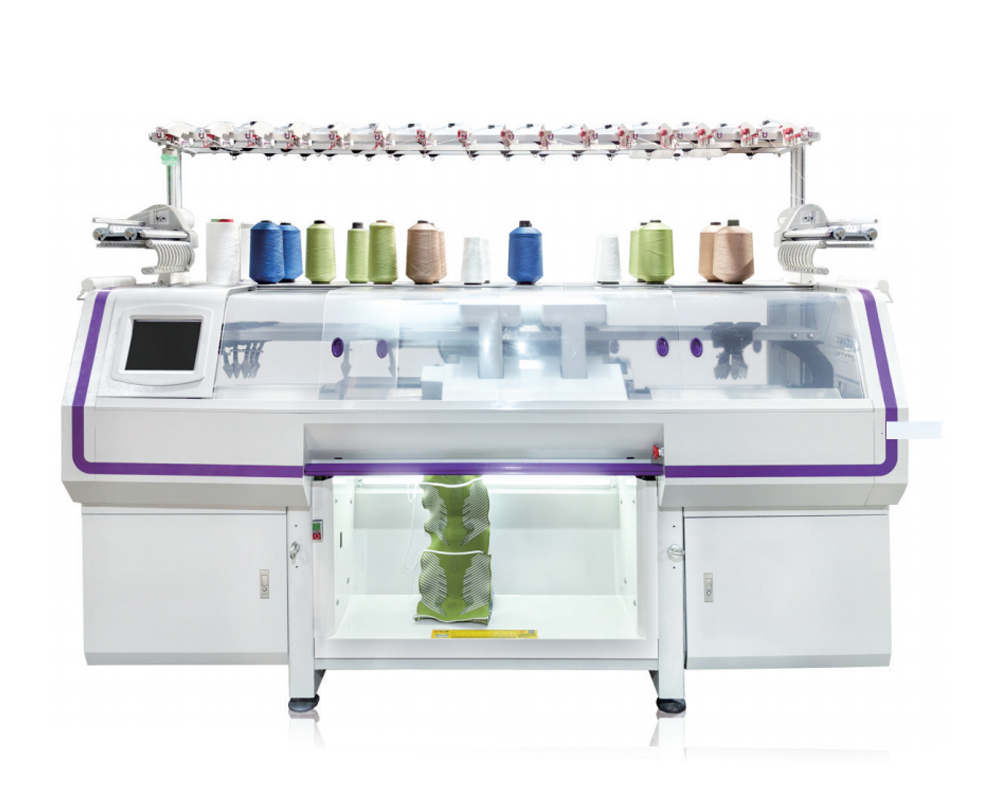
A 3D shoe upper knitting machine is a specialized flat knitting system engineered to produce seamless, shaped shoe uppers directly in a single knitting cycle — without cutting, sewing, or assembling multiple fabric panels. Unlike conventional textile machinery that produces flat fabric to be cut and stitched into shape, these machines knit three-dimensionally by varying stitch structure, yarn tension, and needle engagement across different zones of the upper simultaneously. The finished piece emerges from the machine already shaped to fit the last, requiring only lasting and sole attachment to complete the shoe. This technology is the manufacturing backbone behind flyknit-style athletic footwear and has since expanded into fashion, casual, and performance shoe categories.
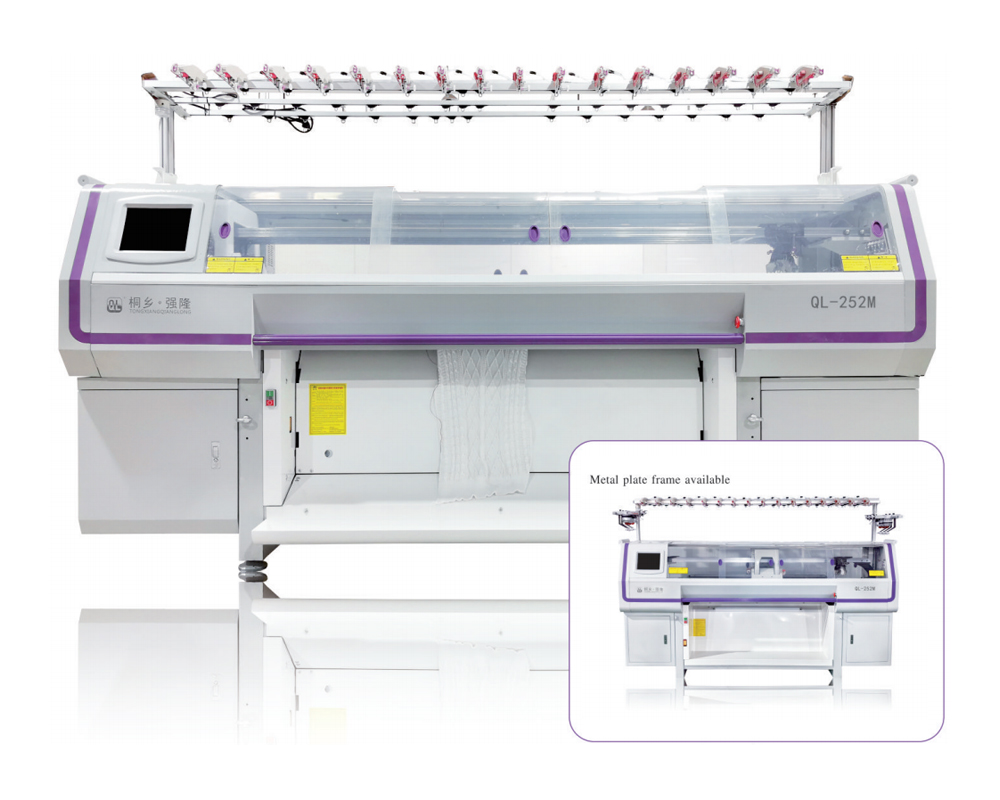
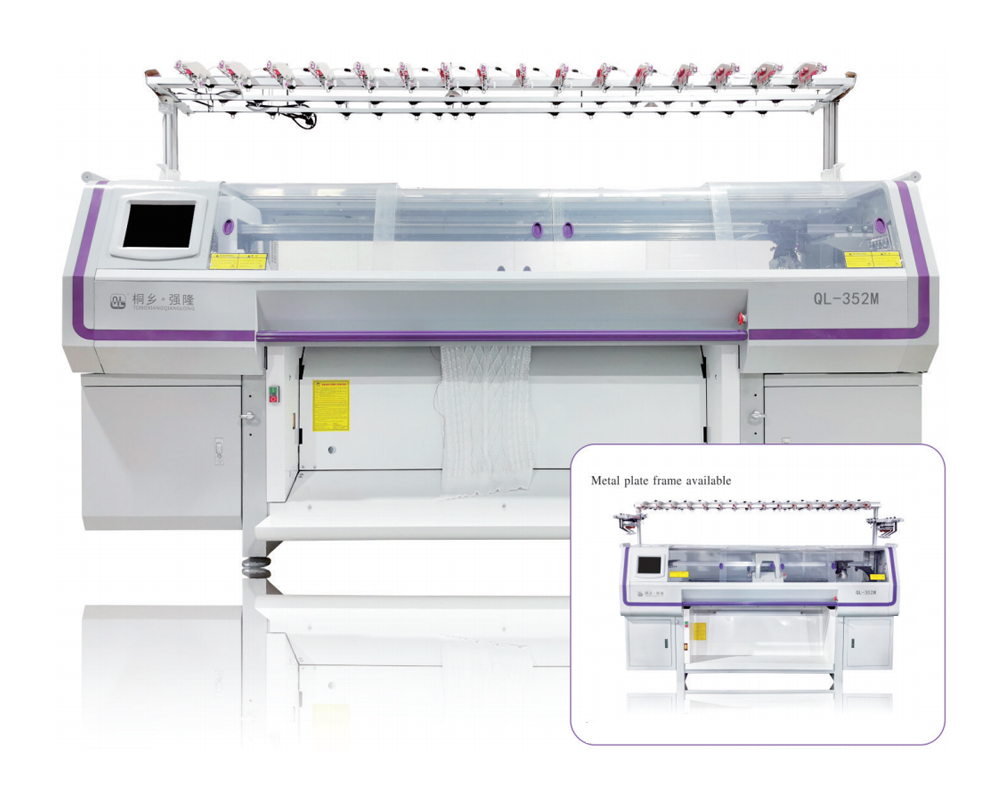
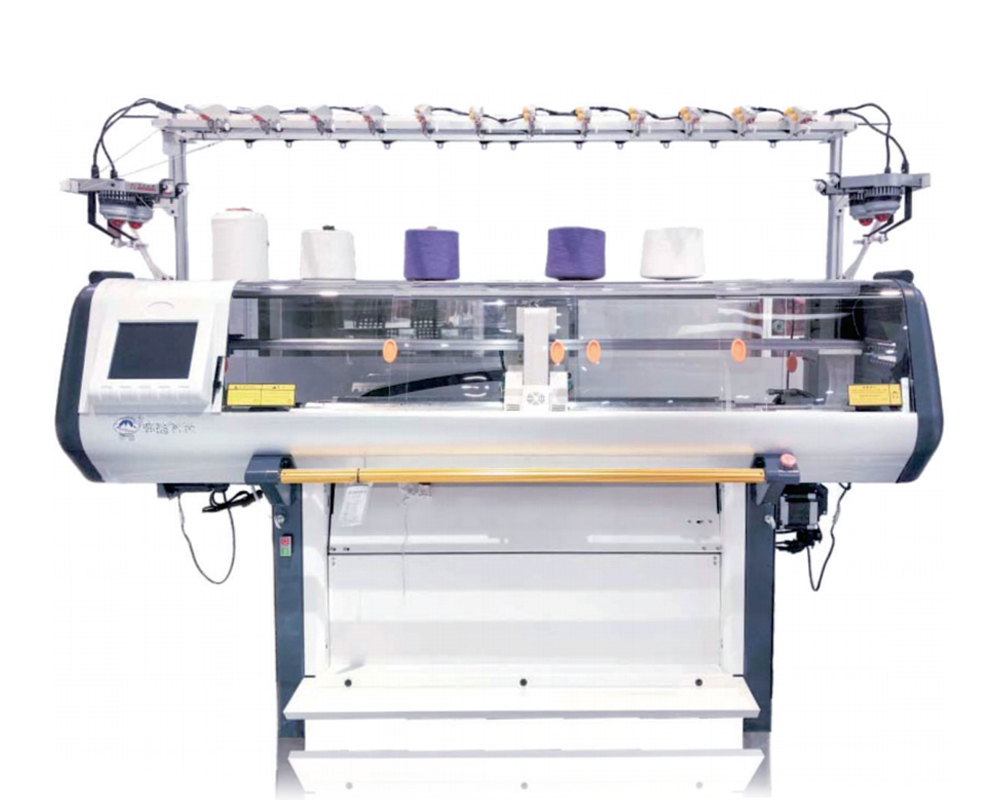
The machines operate on computerized flatbed knitting platforms with two opposing needle beds. By selectively activating needles and controlling yarn carriers with precision, the machine builds up different fabric densities, textures, and structural properties within the same continuous piece. The toe box may be knitted tighter for support, the midfoot more open for breathability, and the heel reinforced with additional yarn passes — all without interrupting the knitting cycle or introducing seams that would otherwise create pressure points against the foot.
How the Technology Works: Key Mechanical Principles
Modern 3D shoe upper knitting machines are derived from whole garment knitting technology but adapted specifically for the dimensional requirements of footwear. The machine's carriage travels back and forth across the needle beds, depositing yarn in controlled sequences driven by a CAD-linked software program. The knitting program encodes every needle movement, every yarn carrier path, and every stitch type across the full surface of the upper.
Three-dimensional shaping is achieved primarily through two techniques: short-row knitting and stitch transfer. Short-row knitting allows the machine to knit only a portion of the needle bed on a given pass, building up extra fabric in targeted areas — such as the instep or heel cup — to create a curved, three-dimensional form. Stitch transfer moves loops between needles, enabling the fabric to taper, widen, or change structure without breaking continuity. Together, these techniques allow the machine to produce a pre-shaped upper that conforms closely to foot geometry before any lasting takes place.
Yarn Feeding and Zone Programming
High-end machines support multiple yarn carriers running simultaneously, allowing different yarns to be knitted into specific zones within the same upper. A performance upper might use a monofilament yarn for structural zones, a textured polyester for grip areas at the heel, a fine elastic yarn along the collar for stretch, and a reflective yarn thread across the lateral panel — all introduced automatically by the machine's carrier system according to the programmed design. This zone-specific material placement replaces the labor-intensive process of stitching overlays, bonded panels, and reinforcement patches onto a base fabric.
Major Machine Types and Leading Manufacturers
The market for 3D shoe upper knitting machines is led by a small group of specialized machinery manufacturers, each with distinct technical approaches and target customer profiles. Understanding the differences between machine platforms is essential for manufacturers evaluating capital investment.
| Manufacturer | Key Platform | Notable Capability |
| Shima Seiki (Japan) | SWG-X, MACH2XS | Whole garment / seamless upper knitting, SDS-ONE APEX design system |
| Stoll (Germany) | CMS 530 HP, ADF series | High-gauge precision, multi-carrier yarn management |
| Santoni (Italy) | SM8 TOP2 series | Circular knitting for sock-like seamless uppers |
| Mayer & Cie (Germany) | OVJA series | Spacer fabric production for cushioning uppers |
| Lonati / Dinema (Italy) | D4 series | High-speed sock-shoe upper production |
Shima Seiki and Stoll dominate the premium flatbed segment, with their machines commonly found in the supply chains of major athletic brands. Chinese domestic manufacturers including Cixing and Wellknit have developed competitive alternatives at lower price points, making the technology increasingly accessible to mid-tier footwear producers in Asia.
Production Advantages Over Conventional Cut-and-Sew Methods
The shift from cut-and-sew upper production to 3D knitting is driven by a combination of economic, quality, and sustainability factors that compound at production scale. Understanding these advantages in concrete terms helps manufacturers and brand developers build the business case for technology adoption.
- Material waste reduction: Traditional cut-and-sew upper production generates 20–35% fabric waste from cutting patterns. 3D knitting produces near-net-shape uppers with less than 5% waste, since yarn is consumed only where structure is needed.
- Labor reduction: A single knitting machine operated by one technician can produce uppers that would otherwise require multiple skilled workers for cutting, stitching, and overlay application. This is particularly significant in markets where labor costs are rising.
- Seamless construction: Eliminating seams removes a major source of fit-related discomfort and reduces the failure points in the upper's structure. Athletic consumers in particular report measurably better fit with seamless uppers, and returns due to upper seam irritation decrease.
- Design flexibility: Colorwork, texture variation, and structural zoning can be changed entirely through software updates rather than tooling changes. New designs can be prototyped in hours rather than weeks.
- On-demand and small-batch production: The digital-to-machine workflow enables small production runs without the cost penalties that make short runs prohibitive in conventional manufacturing, supporting limited-edition releases and regional customization.
Yarn Specifications and Material Compatibility
Not all yarns are compatible with 3D shoe upper knitting machines, and material selection critically affects both machine performance and the functional properties of the finished upper. The machines impose specific requirements on yarn tensile strength, surface friction, and elongation behavior because the yarn is subject to considerable mechanical stress as it passes through the yarn feeders, tension gates, and needle hooks at high speed.
Polyester monofilament and multifilament yarns are the most widely used materials due to their high tenacity, dimensional stability, and compatibility with thermobonding processes that follow knitting. Recycled polyester (rPET) has become standard in many sustainable footwear programs without compromising machinability. Nylon yarns offer superior abrasion resistance for high-wear zones. Thermoplastic polyurethane (TPU) yarns and monofilaments are increasingly used in structural areas because they can be heat-activated after knitting to fuse the upper and add rigidity without adhesive overlays.
Natural fibers present challenges in this application. Cotton and wool have lower tensile strength than synthetics and are more susceptible to yarn breakage under the tension conditions of high-speed knitting. Some manufacturers blend natural fibers into the sheath of core-spun yarns with synthetic cores, allowing natural fiber content to be incorporated without sacrificing yarn integrity during the knitting process. The gauge of the machine — typically ranging from E5 to E18 for shoe uppers — determines the yarn count range that can be processed; finer gauges require finer, more uniform yarns.
Software, Design Integration, and the Digital Workflow
The competitive advantage of 3D shoe upper knitting machines is only fully realized when paired with capable design and programming software. Shima Seiki's SDS-ONE APEX and Stoll's M1 Plus are industry-standard platforms that allow designers to create upper designs visually, assign yarn and stitch types to specific zones, simulate the knitted result in 3D before production, and generate machine-ready knitting programs directly from the design file. This closed-loop digital workflow reduces sampling time from weeks to days and allows colorway variations to be produced without re-engineering the base structure.
Integration with footwear-specific CAD platforms — such as Rhinoceros 3D with footwear plugins or dedicated last design software — allows knitting programs to be developed in direct reference to last geometry. This means the upper can be engineered to conform precisely to the three-dimensional shape of a specific last, minimizing the adjustment required during lasting and improving consistency across production runs. As footwear brands push toward digital-first product development pipelines, the ability to move from 3D last file to knitted sample without physical pattern making has become a meaningful competitive differentiator in speed-to-market.
Factors to Consider When Investing in a 3D Shoe Upper Knitting Machine
For footwear manufacturers evaluating a capital investment in this technology, the decision involves more variables than the machine's sticker price. Total cost of ownership, production flexibility, and technical support infrastructure all factor into the return on investment calculation.
- Gauge selection: Choosing the right gauge for your product range is irreversible once the machine is purchased. E14 and E16 gauges cover the broadest range of performance footwear applications, while coarser gauges (E7–E10) suit chunky or outdoor styles with heavier yarn constructions.
- Software licensing and training: Knitting program development requires skilled technicians. Budget for software licensing, initial operator training, and ongoing technical support from the machine manufacturer — these recurring costs are often underestimated in initial investment planning.
- Throughput vs. flexibility: Machines optimized for high-volume production of a single style run faster but are harder to reprogram for new designs. Machines offering greater programmability are better suited to brands with frequent style updates or custom/on-demand business models.
- After-sales service network: Downtime on a knitting machine is costly. Verify that the manufacturer has a local or regional service presence before committing — machines from premium European or Japanese manufacturers generally offer stronger global service networks than low-cost alternatives.